Why Editorial Art Is A Lot Like Marketing Art
I completed an editorial assignment last week, and it sparked the idea for today’s blog post.
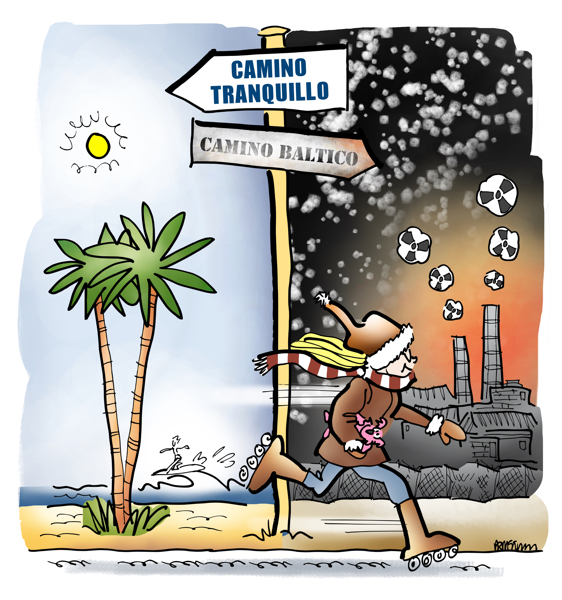
Synopsis: It’s 1998. A California woman, a college senior, is working as an intern at the San Diego Union-Tribune. She spots a flyer in the lobby: REPORTERS NEEDED IN FORMER USSR. She decides to embark on a great adventure.
I was a California native who had spent the last four years in sunny, self-absorbed Southern California. I was tall and athletic with a perpetual smile. I rode my bike or rollerblades everywhere, worked as a waitress at a bakery restaurant, and went for runs on the beach.
I lived on a street with a Spanish name that translated to “quiet road” and survived on frozen yogurt and bagels. The former USSR was about as far from Camino Tranquillo as it gets.
Some personal history:
I started out doing magazine illustration. As magazines declined, I shifted over to marketing and advertising art. But I still do editorial work, and I do book illustration as well.
One bit of advice I heard over and over again: pick a niche,
be a specialist– don’t try to market yourself as someone who does several different things.
I took that advice to heart for a long time. I told people: I create art for marketing and social media campaigns. That’s it. Period.
I thought it best not to mention editorial or book illustration. That was part of a previous life. Talking about it would hurt my credibility.
Lately I’ve had second thoughts. Editorial art and marketing art have much in common. Consider the following:
▶︎ Both have the same goal: to get people’s attention, and get them to read the story.
▶︎ Both are created for a particular target audience. (By contrast, stock art is generic.)
▶︎ In both cases, the art is created specifically for the story.
▶︎ Editorial and marketing art both prioritize getting noticed, which means being different.
▶︎ Both help you find new ways to tell your story, which is essential to growing your audience.
▶︎ Both reflect on you and your brand. You cannot deliver a great user experience by tacking on generic art.
▶︎ Getting noticed means taking risks, which means the art has to stand out. True for both editorial and marketing art.
▶︎ Both kinds require rough sketches and revisions– because some ideas are better than others.
▶︎ Both kinds of art can act as a talk trigger, creating word of mouth.
▶︎ Both kinds of art need to inform the copy, and help communicate it to the reader.
▶︎ Both need to create what marketing expert Andrew Davis calls a curiosity gap, and make the reader want to know more.
▶︎ Both seek to inspire loyalty; to make your brand or publication a lifestyle choice.
Editorial art and marketing art: they both need to grab attention and make an emotional connection.
Here’s another illustration from that same assignment. You can read the full post here: Rumpus Exclusive: Journalists Invade Former Soviet Union.
My unfamiliarity with cold climates, the former USSR, and professional jobs made packing rather challenging. I relied on the LL Bean catalogue for my coat, hat, gloves, and scarf. I figured a Maine company probably knew something about winter…
Wags was a more reasonable, but just as necessary, purchase. A stuffed toy dog, Wags, I decided would be perfect to crush in my arms when I was scared and lonely and far from everyone and everything I knew. He cost twenty dollars, name included.


* * * * * * * * * * * * *
About Mark: I’m an illustrator specializing in humor, editorial, branding, social media, and content marketing.
My images are different, like your brand needs to be.
You can view my portfolio, and connect with me on Twitter, Facebook, and LinkedIn.
Questions? Send me an email.


 Mark Armstrong Illustration Specializing In Content Marketing Advertising Editorial Infographics Animation Videos and Social Media